

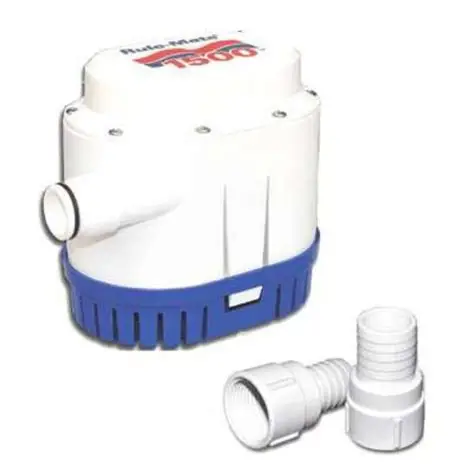

A Beginner’s Guide to Bilge Pumps
If you own a small boat, a bilge pump is one of the most important bits of safety equipment onboard. It’s not glamorous, but when water starts collecting where it shouldn’t, a bilge pump can make the difference between a minor issue and a serious problem.
This guide explains what bilge pumps do, the different types available, and what beginners really need to know.
What Is a Bilge Pump?
A bilge pump removes unwanted water from the bilge — the lowest part of your boat’s hull where water naturally collects.
Water can enter the bilge from:
- Rain and spray
- Small leaks around fittings
- Condensation
- Washing down the deck
Bilge pumps don’t fix leaks, but they help manage water and buy you time if something goes wrong.
Do Small Boats Really Need One?
Yes — even very small boats benefit from a bilge pump.
On open boats and small cuddy cabins:
- Rain can fill the bilge quickly
- A forgotten drain plug can flood the hull
- Waves over the bow add water fast
Even a basic pump provides peace of mind.
Types of Bilge Pumps
1. Manual Bilge Pumps
These are hand-operated pumps.
Pros
- Simple and reliable
- No electricity required
- Cheap
Cons
- Slow
- Requires effort (not ideal in an emergency)
Best as a backup, not your only pump.
2. Electric Bilge Pumps
The most common type on modern boats.
Pros
- Fast and efficient
- Runs at the flick of a switch
- Can work automatically
Cons
- Needs a battery
- Wiring required
Ideal as your main bilge pump.
Automatic vs Manual Electric Pumps
- Manual pump: You turn it on with a switch
- Automatic pump: Uses a float switch or sensor to activate when water rises
For beginners, an automatic pump is strongly recommended. It works even if you’re distracted — or asleep at anchor.
How Big a Bilge Pump Do You Need?
Bilge pumps are rated in GPH (gallons per hour).
Typical guide for small boats:
- Dinghy / small open boat: 500–750 GPH
- 14–18 ft boat: 750–1100 GPH
- 18–22 ft boat: 1100–2000 GPH
Bigger is usually better — you can’t have “too much” pumping capacity.
Where Is a Bilge Pump Fitted?
A bilge pump should sit:
- At the lowest point of the hull
- Where water naturally collects
- Clear of debris
The outlet hose should rise steadily and exit above the waterline.
Common Beginner Mistakes
- ❌ Relying on one pump only
- ❌ Forgetting to test it
- ❌ Letting debris block the intake
- ❌ No fuse fitted to the power line
A bilge pump that isn’t maintained may not work when you need it most.
How Often Should You Test It?
- Before every trip: quick on/off test
- Monthly: check wiring and float switch
- Annually: remove and clean the pump
It only takes minutes and could save your boat.
Final Thoughts
A bilge pump is cheap insurance. Even on a small boat, fitting a reliable pump — preferably automatic — is one of the smartest upgrades you can make.
It won’t stop leaks, but it buys time, reduces stress, and keeps you safer on the water