

Introduction
An outboard engine that won’t start doesn’t always need expensive replacement parts. In many cases, the problem is caused by something simple, such as stale fuel, a flat battery, a blocked fuel line, or an incorrectly fitted emergency stop lanyard.
This guide takes you through 15 checks, starting with the quickest and easiest before moving on to more technical tests. By working through them in order, you can often identify the problem without replacing parts unnecessarily.
Whether you own a Mercury, Mariner, Yamaha, Johnson, Evinrude, Honda, Suzuki, or Tohatsu outboard, these checks apply to most two-stroke and four-stroke engines.
Safety First
Before carrying out any repairs or tests, make sure your outboard engine is safely secured. If you’re running the engine for testing, always provide a suitable water supply using flushing muffs or a test tank. Keep hands, clothing and tools away from the flywheel and propeller, disconnect the battery before working on the electrical system, and never smoke or use naked flames near fuel.
15 Things to Check Before Buying Parts
1. Is the Fuel Tank Vent Open?
A closed fuel tank vent creates a vacuum inside the tank, preventing fuel from reaching the engine.
Check:
- Open the fuel tank vent.
- Squeeze the primer bulb.
- Try starting the engine again.
Workshop Tip: This takes only a few seconds to check and is often overlooked.
2. Is There Fresh Fuel?
Old petrol can quickly become stale, especially if it contains ethanol. Stale fuel can make starting difficult and block carburettors.
Check:
- Smell the fuel.
- Replace old fuel with fresh fuel if you’re unsure.
- Use the correct fuel mixture for two-stroke engines.
3. Is the Primer Bulb Firm?
The primer bulb should become firm after several squeezes.
If it stays soft, possible causes include:
- Air leak in the fuel line
- Loose fuel connector
- Blocked fuel filter
- Faulty primer bulb
4. Is the Emergency Stop Lanyard Attached?
Many engines will never produce ignition if the safety lanyard isn’t fitted correctly.
Check:
- Ensure the clip is fully engaged.
- Try another clip if available.
5. Is the Battery Fully Charged?
Electric start models require a healthy battery.
A weak battery may:
- Turn the engine slowly.
- Prevent the ignition system from operating correctly.
- Cause starting problems.
Check battery voltage and clean the terminals.
6. Is Fuel Reaching the Engine?
Remove the fuel hose and check that fuel flows correctly.
Also inspect:
- Fuel filter
- Fuel connectors
- Fuel line
- Fuel pump
Any restriction can prevent starting.
7. Are the Spark Plugs Wet or Dry?
Spark plugs tell you a lot.
Dry plugs
Usually indicate fuel isn’t reaching the cylinders.
Wet plugs
Usually indicate fuel is present but isn’t igniting properly.
Clean or replace badly fouled plugs.
8. Is There a Good Spark?
Remove a spark plug and test using a proper spark tester.
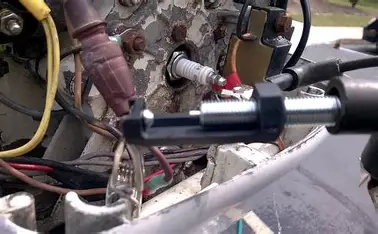
No spark may indicate:
- Faulty kill switch
- Failed ignition coil
- Bad stator
- Faulty CDI
- Damaged wiring
Always test every cylinder individually.
9. Is the Choke Being Used Correctly?
Cold engines usually require choke.
Too much choke can flood the engine.
Too little choke may prevent starting.
Always follow the manufacturer’s recommended starting procedure.
10. Check the Carburettor
Blocked carburettor jets are extremely common after winter storage.
Symptoms include:
- Engine starts then stalls
- Runs only with choke
- Won’t idle
Cleaning the carburettor often restores normal operation.
11. Check the Fuel Pump
A failed fuel pump won’t deliver enough fuel.
Signs include:
- Engine dies under throttle
- Primer bulb collapses
- Hard starting
- Loss of power
Inspect diaphragms for damage.
12. Test Compression
Compression testing quickly tells you the mechanical health of the engine.
Remove all spark plugs.
Open the throttle fully.
Test every cylinder.
Low compression may indicate:
- Worn piston rings
- Scored cylinder
- Burnt piston
- Blown head gasket
The cylinders should generally have similar readings.
13. Is the Timing Correct?
Although uncommon, ignition timing problems can prevent starting.
Possible causes include:
- Sheared flywheel key
- Incorrect timing adjustment
- Damaged ignition components
14. Check for Water in the Fuel
Water contamination is surprisingly common.
Look for:
- Milky fuel
- Water droplets
- Rust inside the fuel tank
Drain contaminated fuel completely before restarting.
15. Look for Simple Mechanical Problems
Before buying expensive parts, inspect the engine carefully.
Look for:
- Loose wiring
- Broken fuel hoses
- Corroded terminals
- Damaged connectors
- Loose earth wires
- Rodent damage
- Blown fuses
Sometimes the fault is surprisingly simple.
When Should You Replace Parts?
Don’t replace components simply because the engine won’t start.
Diagnose the fault first.
Testing before buying parts often saves both time and money and prevents replacing perfectly good components.
Frequently Asked Questions
My outboard turns over but won’t fire.
This usually indicates either no spark or no fuel reaching the cylinders.
The primer bulb won’t go hard.
Check for air leaks, blocked filters, loose connectors or a faulty bulb.
I have spark but it still won’t start.
The problem may be fuel delivery, flooding, poor compression or incorrect ignition timing.
How long can petrol stay in an outboard?
Fresh fuel is always best. Fuel stored for several months can deteriorate and cause running problems.
Should I replace the spark plugs first?
Spark plugs are inexpensive and are often worth replacing if they’re old or heavily fouled, but always confirm they’re actually the cause of the problem.
Need Replacement Parts?
If you’ve identified the faulty component, browse OutboardBits for quality new and used outboard parts, including:
- Carburettors
- Fuel pumps
- Starter motors
- Ignition coils
- CDI units
- Gearboxes
- Propellers
- Flywheels
- Water pumps
- Complete outboard engines
Related Articles
You may also find these guides helpful:
- The Complete Guide to Outboard Repairs
- How to Test Spark on an Outboard
- Cleaning an Outboard Carburettor
- How to Replace an Impeller
- Compression Testing an Outboard
- Why Is My Outboard Overheating?
- How to Change Gearbox Oil
- Winterising Your Outboard
Still having trouble?
If your engine still won’t start after completing these checks, don’t guess. Work through each system one at a time—fuel, ignition, compression, cooling, and mechanical condition. A methodical approach will usually reveal the fault and help you avoid replacing parts that aren’t actually defective..