

Introduction
If your outboard engine won’t start, runs poorly, overheats, loses power, or simply isn’t performing as it should, you’ve come to the right place.
This guide has been created to help boat owners diagnose and repair the most common outboard engine problems, whether you own a Mercury, Mariner, Yamaha, Johnson, Evinrude, Honda, Suzuki, Tohatsu, or another popular brand.
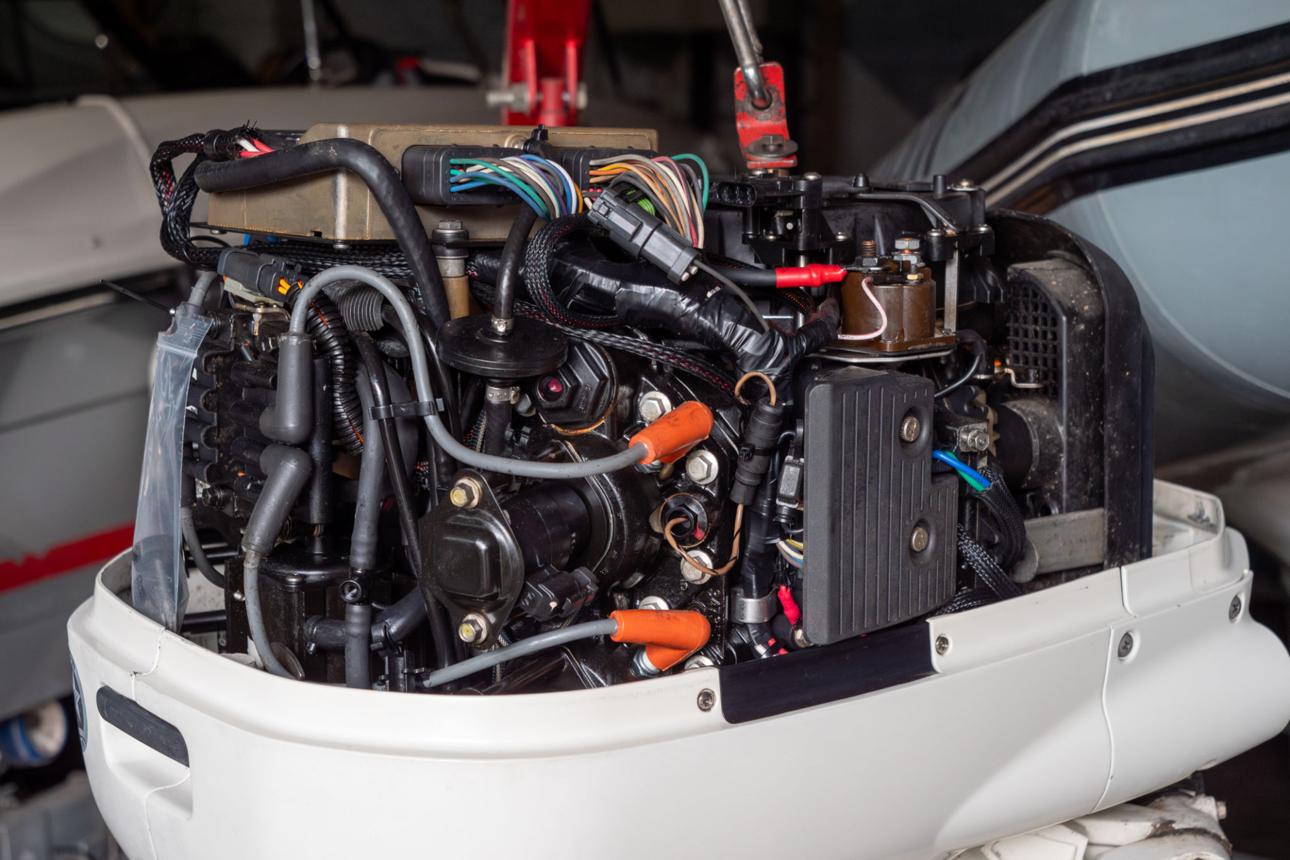
Most outboard faults can be traced to one of five main systems: the fuel system, ignition system, cooling system, powerhead, or gearbox. Understanding how these systems work together makes diagnosing problems much easier and can save both time and money.
Whether you’re maintaining a modern four-stroke or restoring a classic two-stroke, this guide will help you understand your engine and keep it running reliably.
In This Guide
We’ll cover:
- How an outboard engine works
- Why an outboard won’t start
- Diagnosing fuel system problems
- Finding ignition and spark faults
- Cooling system and overheating issues
- Compression testing and engine health
- Gearbox and propeller problems
- Essential maintenance
- Frequently asked questions
- Links to detailed repair guides
How an Outboard Engine Works
An outboard engine is a self-contained unit mounted on the transom of your boat. It combines the engine, cooling system, gearbox, and propeller into one compact package.
The engine burns a mixture of fuel and air inside the cylinders. The resulting power turns a crankshaft, which drives a vertical driveshaft down to the gearbox. The gearbox then turns the propeller, pushing the boat through the water.
For an outboard to operate correctly, several systems must work together.
Fuel System
The fuel system supplies clean fuel from the fuel tank to the engine. Components include the fuel tank, fuel line, primer bulb, fuel filter, fuel pump, and either a carburettor or fuel injectors.
Common problems include blocked filters, stale fuel, cracked fuel lines, dirty carburettors, and faulty fuel pumps.
Ignition System
The ignition system creates the spark that ignites the fuel mixture inside each cylinder.
Main components include:
- Flywheel
- Stator
- CDI or ignition module
- Ignition coils
- Spark plug leads
- Spark plugs
Typical faults include weak spark, no spark, faulty kill switches, damaged coils, and worn spark plugs.
Cooling System
Outboards are water-cooled.
A rubber impeller pumps water through the engine to remove heat before it exits through the tell-tale (“pee hole”).
A worn impeller or blocked cooling passages can quickly cause overheating and expensive engine damage.
Powerhead
The powerhead contains the pistons, cylinders, crankshaft, bearings, connecting rods, and cylinder head.
Good compression is essential for easy starting and reliable performance.
Gearbox and Propeller
The lower unit contains the gears that provide forward, neutral, and reverse.
The propeller converts engine power into thrust.
Damaged props, worn seals, or contaminated gearbox oil can all reduce performance.
Why an Outboard Won’t Start
A non-starting outboard is one of the most common problems owners face.
Most starting issues are caused by one of four things:
- No fuel
- No spark
- Low compression
- Incorrect starting procedure
Start by checking:
- Fuel tank vent open
- Primer bulb firm
- Emergency stop lanyard fitted
- Battery fully charged (electric start models)
- Fuel reaching the engine
- Spark at each plug
- Compression within specification
Systematically checking each area will usually identify the fault without replacing unnecessary parts.
Diagnosing Fuel System Problems
Fuel problems are extremely common, especially after an engine has been left unused.
Symptoms include:
- Engine won’t start
- Starts then stalls
- Runs only on choke
- Poor acceleration
- Rough idle
- Loss of power
Common causes include:
- Old fuel
- Water contamination
- Blocked carburettor jets
- Dirty fuel filter
- Split fuel hose
- Failed fuel pump
- Blocked fuel tank vent
Fresh fuel and regular servicing prevent many of these issues.
Finding Ignition and Spark Faults
Without a strong spark, an outboard cannot run properly.
Signs of ignition problems include:
- No start
- Misfiring
- Running on fewer cylinders
- Hard starting
- Poor performance
Testing should include:
- Spark plugs
- Plug leads
- Ignition coils
- Kill switch
- Stator
- CDI unit
Always use an appropriate spark tester rather than holding a plug against the engine by hand.
Cooling System and Overheating
The cooling system protects your engine from overheating.
Watch for:
- Weak tell-tale
- Steam
- Overheat alarms
- Loss of power
- Hot engine block
Possible causes include:
- Worn impeller
- Blocked intake screens
- Salt deposits
- Blocked cooling passages
- Faulty thermostat
Replacing the impeller every two or three years is inexpensive insurance against serious engine damage.
Compression Testing and Engine Health
Compression testing is one of the quickest ways to assess the condition of an outboard engine.
Healthy compression helps ensure:
- Easy starting
- Good power
- Smooth idle
- Efficient fuel consumption
When testing:
- Remove all spark plugs.
- Open the throttle fully.
- Use a quality compression gauge.
- Test each cylinder.
The actual pressure varies by engine, but the cylinders should generally be close to one another. A large difference between cylinders is often more significant than the absolute reading.
Gearbox and Propeller Problems
The lower unit transfers engine power to the propeller.
Common problems include:
- Milky gearbox oil
- Oil leaks
- No forward gear
- No reverse gear
- Prop vibration
- Bent propeller
- Fishing line around prop shaft
Changing gearbox oil annually helps detect seal problems before expensive damage occurs.
Essential Outboard Maintenance
Routine maintenance dramatically improves reliability.
Regular jobs include:
- Change gearbox oil
- Replace the water pump impeller
- Grease moving parts
- Check spark plugs
- Replace fuel filters
- Flush the cooling system after saltwater use
- Inspect fuel lines
- Check propeller for damage
- Lubricate steering pivots
Keeping a simple maintenance log also makes it easier to spot recurring issues.
Frequently Asked Questions
Why won’t my outboard start after winter?
Old fuel, blocked carburettors, flat batteries, or stale fuel are common causes.
Why is there no water coming from the tell-tale?
The impeller may be worn, or the cooling passages or tell-tale outlet could be blocked.
Can I run my outboard out of the water?
Only when using flushing muffs or a suitable test tank that supplies cooling water.
How often should I replace the impeller?
Many manufacturers recommend inspection every year and replacement every two to three years, depending on use.
What compression should my outboard have?
It varies by engine model. More important than the exact reading is that all cylinders are reasonably even.
Detailed Repair Guides
This guide links to more detailed articles covering:
- Outboard Won’t Start – 15 Things to Check
- Cleaning an Outboard Carburettor
- Replacing a Water Pump Impeller
- Testing Spark on an Outboard
- Compression Testing Explained
- Gearbox Oil Changes
- Winterising an Outboard
- Diagnosing Fuel Pump Problems
- Tell-Tale Not Working
- Common Two-Stroke Problems
- Common Four-Stroke Problems
Find Outboard Parts
If your repair requires replacement parts, browse the OutboardBits marketplace for new and used outboard engine parts from independent marine sellers across the UK.
Whether you’re looking for a carburettor, starter motor, ignition coil, gearbox, propeller, flywheel, or complete outboard engine, you’ll find listings covering many of the most popular manufacturers.