

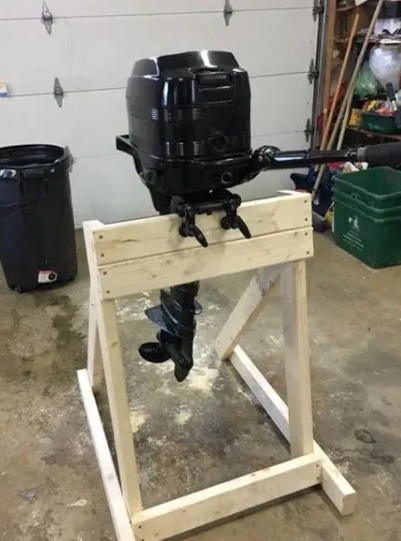

✅ Is scaffolding suitable?
Yes, if:
- You use steel scaffold tube (48.3 mm standard)
- You brace it properly
- The stand is wide and low for stability
A 40–60 hp outboard can weigh 90–120 kg, and bigger ones more — so stability matters more than strength.
⚠️ Key risks to avoid
- Narrow footprint → tipping risk
- No diagonal bracing → wobble
- Weak transom board → cracking or failure
- Castors not rated for the weight
Most accidents happen when the engine is tilted or being worked on.
✔️ Recommended design (safe setup)
Frame
- Rectangle base: 800–1000 mm wide
- Depth: 600–700 mm
- Uprights: 700–900 mm high
- Use right-angle scaffold couplers
- Add diagonal braces front-to-back or side-to-side
Transom board
- 50–60 mm hardwood or laminated ply
- Minimum 300 mm high
- Through-bolt it to a cross tube (don’t just clamp wood)
Wheels (optional)
- Heavy-duty braked castors, rated 100 kg+ each
- Fit all 4 with brakes
🔧 Simple scaffold stand parts list
- 4 × scaffold tubes (base)
- 2 × upright tubes
- 1 × cross tube (engine mount)
- 8–10 × right-angle couplers
- 2 × swivel couplers (for braces)
- 1 × hardwood transom board
- M12 bolts & washers
🆚 Scaffold vs timber stand
Scaffold pros
- Very strong
- Adjustable height
- Long-lasting
Scaffold cons
- Heavy
- More expensive than timber
- Needs proper bracing
For small outboards (up to ~15 hp), timber is easier. For 40 hp+, scaffold is a solid choice.
🛠️ Extra safety tips
- Keep the engine as low as possible
- Always lock the tilt
- Don’t work on it while someone is pushing it
- Test stability before mounting the engine